
Electric Vehicle Loans :: News
SHARE

Share this news item!

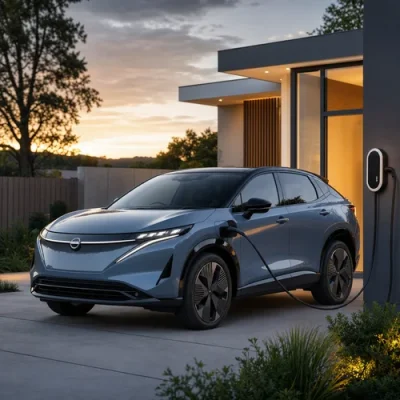
Next Nissan Leaf Could Reset the Family EV Shortlist

Longer range and a new crossover shape may sharpen loan comparisons

Next Nissan Leaf Could Reset the Family EV Shortlist?w=400

The information on this website is general in nature and does not take into account your objectives, financial situation, or needs. Consider seeking personal advice from a licensed adviser before acting on any information.

Nissan's next-generation Leaf is shaping up as a more serious contender for Australian electric vehicle buyers, with the familiar hatchback nameplate moving towards a sleeker crossover format and a more competitive technology package.
While local pricing and final specifications are still to be confirmed, the new model matters because it could return a trusted mainstream badge to the centre of the EV conversation.

The Leaf was one of the early electric cars available to Australian drivers, but the market has changed dramatically since its first arrival. Buyers now compare longer ranges, faster charging, better software, stronger warranties and sharper drive-away pricing. Nissan's newer approach appears designed to respond to that shift, with overseas details pointing to improved battery options, a more aerodynamic body and range figures that should make it more relevant for households wanting one vehicle for commuting, school runs and weekend trips.

For finance shoppers, the key issue will be where the new Leaf lands on price. If Nissan positions it close to high-volume electric SUVs and hatchbacks from Tesla, BYD, MG, Hyundai, Kia and Volkswagen, it may become another practical option for buyers who want brand familiarity without stepping into premium pricing. If it arrives too high, however, the monthly repayment gap against lower-priced Chinese rivals could be difficult to ignore.

This is where buyers should look beyond the badge and compare the total ownership picture. Range is important, but so are charging speed, servicing costs, warranty coverage, expected depreciation and the finance structure itself. A lower purchase price may help affordability, but a competitive interest rate, suitable loan term and sensible deposit can also materially change the outcome. Before committing, buyers may want to model repayments across several scenarios rather than focusing only on the headline price.

The Leaf's return in a more modern form also underlines how quickly EV finance options are evolving. More mainstream brands are bringing electric models into popular family segments, giving lenders clearer vehicle data and giving consumers more choice. That can support better comparison shopping, particularly for buyers weighing a green vehicle loan against a standard car loan or considering whether to include on-road costs in the finance amount.

Until Australian pricing is locked in, the new Leaf remains one to watch rather than one to budget around with certainty. But if Nissan gets the value equation right, it could give EV buyers another credible middle-ground choice: recognisable, practical and potentially easier to justify in a household finance plan.

Published:Wednesday, 26th Aug 2026
Author: Paige Estritori

Please Note: We do not endorse any specific products or companies. Some content is sourced from third parties, including press releases, and may not be independently verified for accuracy or completeness.

Share this news item:

Rate this article

0 Comments

No comments yet. Be the first to share your thoughts.

Finance News

EVs Ahead of Petrol Again, But Finance Still Needs a Wider Lens
11 Nov 2026: Paige Estritori
Battery-electric vehicles have outsold petrol-only cars in Australia for a third consecutive month, reinforcing how quickly the finance conversation around electric cars is moving from early-adopter curiosity to mainstream household budgeting. October figures reported from VFACTS and Electric Vehicle Council data put battery EV sales at 24,845 vehicles, or 23.1 per cent of the new-vehicle market, ahead of 23,605 petrol-only vehicles but slightly behind diesel at 25,649. - read more
NSW strata charger reforms could reshape apartment EV budgeting
28 Oct 2026: Paige Estritori
NSW has moved closer to making apartment EV charging a practical part of vehicle ownership, with the Strata Schemes Legislation Amendment (Miscellaneous) Act 2026 assented on 23 October and government guidance indicating further reforms planned to start in 2027. For electric vehicle buyers in strata buildings, the change is not just a property-law update; it could affect how households think about finance, charging access and the real cost of switching from petrol to electric. - read more
Leapmotor B10 Points to More Choice for Price-Sensitive EV Buyers
16 Sep 2026: Paige Estritori
Leapmotor’s B10 is emerging as another model to watch in Australia’s fast-changing electric SUV market, with local attention building around the compact battery-electric SUV as the Chinese brand expands beyond its larger C10. For households that have been waiting for EV prices to move closer to mainstream petrol and hybrid alternatives, the B10 could become a meaningful addition if it lands with sharp pricing and practical range. - read more
Next Nissan Leaf Could Reset the Family EV Shortlist
26 Aug 2026: Paige Estritori
Nissan's next-generation Leaf is shaping up as a more serious contender for Australian electric vehicle buyers, with the familiar hatchback nameplate moving towards a sleeker crossover format and a more competitive technology package. While local pricing and final specifications are still to be confirmed, the new model matters because it could return a trusted mainstream badge to the centre of the EV conversation. - read more


Car Loan Articles

How electric vehicle incentives and tax concessions can affect EV purchase costs in Australia
Electric vehicle incentives, rebates and tax concessions can change the upfront and ongoing cost of buying an EV in Australia. This guide explains the main types of support and how they may affect finance planning. - read more
What to know about financing a used electric vehicle in Australia
Financing a used electric vehicle can differ from financing a new EV because lenders may look more closely at vehicle age, battery condition, warranty status, valuation, green loan eligibility and how the car is being purchased. - read more
How Electric Vehicles Are Valued for Finance and Insurance
As electric vehicles (EVs) become an increasingly important part of Australia's automotive market, understanding how they are valued has become relevant to vehicle finance, insurance and resale transactions. Unlike conventional vehicles, EV valuations may also consider factors such as battery condition, software capability and rapidly evolving technology alongside more traditional valuation criteria. - read more
Understanding Electric Vehicle Depreciation and Resale Value
Depreciation refers to the gradual reduction in a vehicle's market value over time. Like all vehicles, electric vehicles (EVs) generally depreciate as they age, accumulate kilometres and become superseded by newer models. Understanding depreciation is an important part of evaluating the overall cost of EV ownership because it influences the vehicle's value throughout its ownership life. - read more

Knowledgebase
Lien:
A legal claim against a property that must be paid off when the property is sold.