Electric Vehicle Loans Vehicle Lease Repayment Calculator
Use this calculator to calculate the monthly lease payments for a motor vehicle. Compare various car leasing interest rates, loan terms and residual/balloon payments.
'Calculator results are estimates only and not quotes. Actual quotes will be provided by licensed brokers after you submit an enquiry.'
Car Lease Details:
Important!
Car Lease Interest Rates differ from lender to lender and will depend on your individual circumstances (credit history, employment status, age, etc.). To find out if you qualify ... and for a free, personalised interest rate and repayment quote,
please CLICK HERE
Car Lease Amortisation Calculator
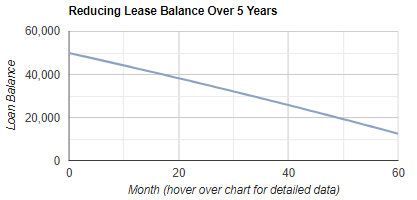
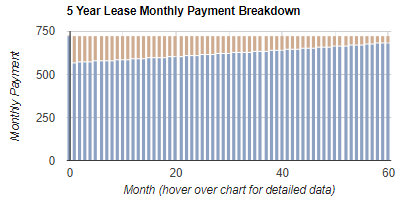
The following amortisation graphs detail month-by-month data on the progress of the proposed loan. The first chart below examines the reducing loan balance over the course of the finance contract term. The second graph illustrates the portion of each monthly repayment allocated to payment of interest vs principal reduction.
How to use our Vehicle Lease Repayment Calculator
Our Vehicle Lease Repayment Calculator helps you estimate monthly lease repayments for a motor vehicle by modelling three key variables: interest rate, lease term, and the residual or balloon amount payable at the end. It’s important because small changes to any of these inputs can materially affect cash flow, total interest over the term, and the end-of-lease obligation, helping you compare scenarios before you speak with a lender or novated leasing provider.
How to complete the form for the best result:
1. Purchase Price
Enter the total amount you want financed for the vehicle. Include relevant upfront costs you intend to roll into the lease (for example, on-road costs or insurance where applicable). Use whole numbers only (no decimals, commas, or dots).
2. Balloon or Residual Value (percent of purchase price)
Select the residual percentage. A higher residual generally reduces the monthly payment but increases the amount left owing at the end, which can increase overall cost across the term. Choose a residual that matches your intended end-of-lease plan (keep, refinance, or sell).
3. Term of Loan (years)
Choose the number of years. Longer terms usually reduce monthly repayments but can increase total interest paid. Select a term that suits how long you expect to keep the vehicle and your budget tolerance.
4. Interest Rate (per annum)
Select an interest rate to simulate. Use a conservative rate when stress-testing affordability, because your actual rate may differ depending on lender policy and your circumstances.
5. Calculate
Click calculate to generate your estimated monthly lease repayment and amortisation visuals.
How to interpret the results:
1. Monthly repayment estimate: Use this as a budgeting guide and compare scenarios by adjusting term, rate, and residual.
2. Amortisation charts: Review how the balance reduces over time and how much of each payment is interest versus principal; this highlights when interest costs are highest and the impact of a larger residual.
ASIC compliance note: This guide is general information only and does not consider your objectives, financial situation or needs. Consider the full lease contract, fees, taxes, insurance, maintenance, and end-of-lease options before deciding, and consider getting personal advice if needed.
Leapmotor’s B10 is emerging as another model to watch in Australia’s fast-changing electric SUV market, with local attention building around the compact battery-electric SUV as the Chinese brand expands beyond its larger C10. For households that have been waiting for EV prices to move closer to mainstream petrol and hybrid alternatives, the B10 could become a meaningful addition if it lands with sharp pricing and practical range. - read more
Nissan's next-generation Leaf is shaping up as a more serious contender for Australian electric vehicle buyers, with the familiar hatchback nameplate moving towards a sleeker crossover format and a more competitive technology package. While local pricing and final specifications are still to be confirmed, the new model matters because it could return a trusted mainstream badge to the centre of the EV conversation. - read more
Australia's electric vehicle market is entering a more practical phase for buyers who have been interested in switching to battery power but cautious about new-car prices. Recent industry reporting points to a growing pool of used EVs, helped by stronger new-vehicle sales over the past few years, more fleet turnover and a broader range of brands competing for attention. - read more
Australia’s electric SUV market is set to become even more competitive, with Zeekr’s 7X moving closer to local showrooms. The premium Chinese brand has been expanding internationally and the 7X is positioned as a family-sized electric SUV that could appeal to buyers considering established options such as the Tesla Model Y, BYD Sealion 7, Polestar 4 and Kia EV5. - read more
Depreciation refers to the gradual reduction in a vehicle's market value over time. Like all vehicles, electric vehicles (EVs) generally depreciate as they age, accumulate kilometres and become superseded by newer models. Understanding depreciation is an important part of evaluating the overall cost of EV ownership because it influences the vehicle's value throughout its ownership life. - read more
Electric vehicles (EVs) are becoming an increasingly common part of Australia's transport landscape. Improvements in battery technology, expanding charging infrastructure and a growing range of available models have contributed to increased consumer interest in electric vehicle ownership across both metropolitan and regional areas. - read more
Electric Vehicles (EVs) are automobiles that are propelled by electric motors powered by rechargeable battery packs. They offer a cleaner, more sustainable alternative to traditional petrol and diesel-powered cars. - read more
Electric vehicles (EVs) are swiftly becoming a favorite choice for many Australians. Their eco-friendly profile and the advancement in Electric Vehicle technology have driven a surge in popularity. More Australians are viewing Electric Vehicles as a viable alternative to traditional petrol and diesel vehicles, not just for environmental reasons but also for the long-term savings on fuel and maintenance costs. - read more
Knowledgebase
Asset-Backed Security (ABS): A financial security backed by a pool of assets, such as loans, leases, credit card debt, royalties, or receivables.