
Electric Vehicle Loans :: News
SHARE

Share this news item!

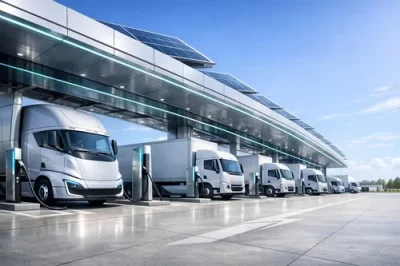
Zenobē's $100 Million Investment to Accelerate Electric Truck Adoption in Australia

Major Funding Initiative Aims to Double Heavy Electric Trucks by 2026

Zenobē's $100 Million Investment to Accelerate Electric Truck Adoption in Australia?w=400

The information on this website is general in nature and does not take into account your objectives, financial situation, or needs. Consider seeking personal advice from a licensed adviser before acting on any information.

Zenobē, a global leader in fleet electrification and battery storage, has announced a substantial investment of AUD $100 million to support the adoption of electric trucks in Australia.
This initiative is poised to significantly impact the nation's transport sector by potentially doubling the number of heavy electric trucks on Australian roads by the end of 2026.

The investment targets heavy commercial vehicles and the necessary charging infrastructure to support them. With approximately 1,000 heavy electric trucks currently in service across Australia, and 56% of the national truck fleet being over a decade old, this funding comes at a crucial time. Fleet operators facing decisions about replacing aging diesel trucks now have a viable, sustainable alternative.

Zenobē's funding package extends beyond vehicle procurement. It encompasses charging infrastructure, battery replacements, and deployment support. Additionally, the company offers depot assessments, fleet and energy modeling, and tailored proposals for operators considering a shift away from diesel. This comprehensive approach aims to address both the financial and operational barriers that have historically slowed adoption in the freight sector.

One of the standout features of Zenobē's initiative is the provision of upfront planning work at no cost to operators. This strategy is designed to bring the total cost of ownership for electric fleets in line with that of diesel, making the transition more financially feasible for businesses.

The announcement comes at a time when electric truck sales are beginning to rise from a low base in Australia. In 2024, around 500 electric trucks were on track to be sold, surpassing the combined total sold in the previous decade. Despite this growth, the market remains in its early stages, particularly in the heavy vehicle segment, where charging requirements, depot design, and financing structures can complicate fleet replacement.

Zenobē's commitment reflects a broader strategy to support up to 4,000 electric commercial vehicles globally by the end of 2026. Alongside fleet electrification, the company repurposes end-of-life electric vehicle batteries for on-site and portable power applications, including fleet charging and construction sites.

Gareth Ridge, Zenobē's Country Director for Australia and New Zealand, emphasized the significance of this investment, stating, "The direction we set in the next five years will define the trajectory for the next two decades." He highlighted the company's goal to make the transition to electric fleets cost-neutral, ensuring that the sustainable choice is also the commercially viable one.

For Australian fleet operators, this investment presents an opportunity to modernize their fleets, reduce emissions, and align with global sustainability trends. As the transport sector accounts for a significant portion of national emissions, initiatives like Zenobē's are essential in driving the shift towards cleaner, more efficient transportation solutions.

Published:Sunday, 5th Apr 2026
Author: Paige Estritori

Please Note: We do not endorse any specific products or companies. Some content is sourced from third parties, including press releases, and may not be independently verified for accuracy or completeness.

Share this news item:

Rate this article

0 Comments

No comments yet. Be the first to share your thoughts.

Finance News

Cheaper Used EVs Could Change the Finance Equation
12 Aug 2026: Paige Estritori
Australia's electric vehicle market is entering a more practical phase for buyers who have been interested in switching to battery power but cautious about new-car prices. Recent industry reporting points to a growing pool of used EVs, helped by stronger new-vehicle sales over the past few years, more fleet turnover and a broader range of brands competing for attention. - read more
Zeekr 7X Could Widen Choice for Australian EV SUV Buyers
04 Aug 2026: Paige Estritori
Australia’s electric SUV market is set to become even more competitive, with Zeekr’s 7X moving closer to local showrooms. The premium Chinese brand has been expanding internationally and the 7X is positioned as a family-sized electric SUV that could appeal to buyers considering established options such as the Tesla Model Y, BYD Sealion 7, Polestar 4 and Kia EV5. - read more
BYD’s Smallest EV Shapes Up as a Budget Breakthrough
28 Jul 2026: Paige Estritori
BYD’s smallest electric car is edging closer to Australian showrooms, and its arrival could be more important for finance shoppers than its compact size suggests. The model, known in some markets as the Dolphin Surf or Seagull and expected locally as the Atto 1, is positioned as a city-friendly electric hatch rather than a long-distance family SUV. That makes it a different proposition from many of the EVs that have dominated Australian sales charts so far. - read more
Tesla’s Guaranteed Future Value Loan Could Reframe EV Buying
21 Jul 2026: Paige Estritori
Tesla Australia has added a new finance pathway for local buyers through a Guaranteed Future Value loan arranged with Driva, giving approved customers a clearer view of what their vehicle may be worth at the end of the loan term. For Australians weighing up an electric vehicle loan, the move is notable because it targets one of the lingering concerns around EV ownership: depreciation. - read more


Car Loan Articles

How to Integrate Electric Vehicles into Your Home Energy System
Electric Vehicles (EVs) are automobiles that are propelled by electric motors powered by rechargeable battery packs. They offer a cleaner, more sustainable alternative to traditional petrol and diesel-powered cars. - read more
Understanding Electric Vehicle Depreciation and Resale Value
Depreciation refers to the gradual reduction in a vehicle's market value over time. Like all vehicles, electric vehicles (EVs) generally depreciate as they age, accumulate kilometres and become superseded by newer models. Understanding depreciation is an important part of evaluating the overall cost of EV ownership because it influences the vehicle's value throughout its ownership life. - read more
Understanding Green Car Loans and Electric Vehicle Finance in Australia
As electric vehicles become more common across Australia, finance products have also evolved to support changing consumer preferences and emerging vehicle technologies. In addition to traditional car loans, some lenders now offer finance products specifically designed for eligible electric and low-emission vehicles, often referred to as green car loans or electric vehicle finance. - read more
Key Trends Shaping the Future of Electric Vehicle Financing in Australia
The electric vehicle (EV) revolution is taking Australia by storm, with more drivers switching to cleaner, greener alternatives to traditional petrol cars. As environmental consciousness grows, so does the demand for electric vehicles, making it crucial for consumers to understand how to finance these modern marvels effectively. - read more

Knowledgebase
Tax Deferral:
A situation where a taxpayer is allowed to delay paying taxes on income until a future date, commonly seen in retirement accounts.